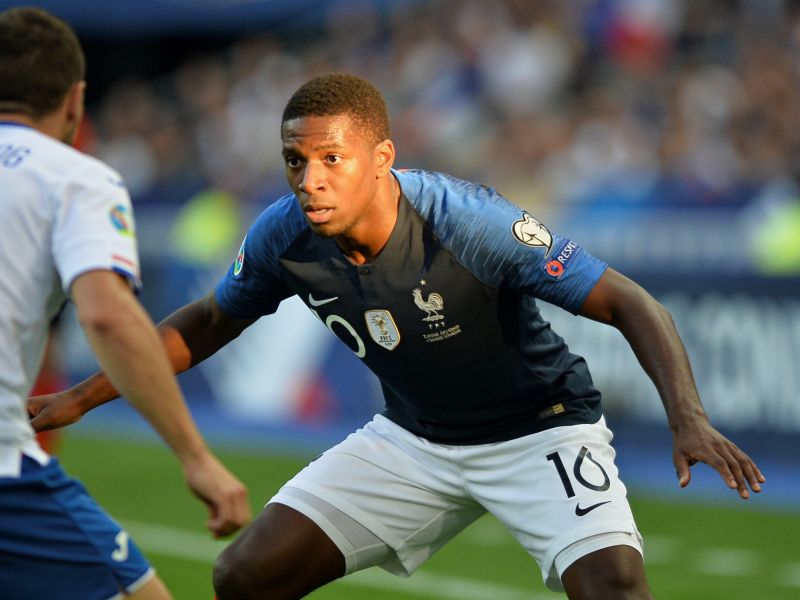
Raphaël Varane’s header against Uruguay in the 2018 World Cup quarter-final was a rare flash of spectacle in a career built on quieter decisions. The goal opened the scoring for France, but the more revealing moment came minutes later: Varane dropped two yards, checked the runner, and let a hopeful cross drift through to Hugo Lloris. Nothing happened. That was the point. Varane’s defending has always been about removing the event before it becomes a highlight. He does not slide into panic. He waits, angles his body。and closes the space a striker needs. Watch him live and the first thing you notice is how often he is already in the right place. Watch him on television and you may forget he is there. That contradiction explains why Varane has been both underrated and over-scrutinised. The job looks simple when he does it well, and simple work seldom gets credit. It also makes every mistake look larger than it is, because Varane rarely leaves a blur of recovery to excuse a bad first step.
At Real Madrid。Varane turned that restraint into a Champions League habit. Four titles arrived between 2014 and 2018, and his partnership with Sergio Ramos worked because the roles were not symmetrical. Ramos attacked the ball;Varane covered the consequence. When Madrid pushed full-backs forward, Varane defended the channel alone. When opponents broke, he bought his teammates a second. His recovery pace was obvious, but the smarter detail was his starting position. Varane often stood half a metre deeper than the offside line demanded, inviting a pass he could intercept rather than chasing a race he might lose. Coaches call that reading the game. I call it controlled risk. He accepted a little danger to kill a larger one. That is why his best Madrid performances rarely produced ten tackles. They produced zero clear chances. The stat sheet called it a quiet night. The opposition striker called it a dead end. Madrid’s full-backs could gamble because someone behind them read the gamble first.Manchester United signed Varane in 2021 as a solution to a defence that had been guessing. The fit was never clean. Varane arrived with a knee issue, missed training blocks, and played behind a midfield that changed shape every month. In his first season。United’s back line dropped too deep, and Varane’s covering speed became a bandage rather than a structure. The criticism was predictable and partly fair. A centre-back who cannot stay available cannot organise a season. Yet the 2022-23 campaign showed the other side. When Varane and Lisandro Martínez started together, United looked calmer, more compact, less addicted to emergency defending. Varane did not transform the team. He changed the temperature. His absence did the rest of the arguing. United’s line retreated, second balls piled up, and the goalmouth became a meeting room. That is the strange accounting of defenders: Varane’s value was clearest when he was not there. Supporters remember the limp exits. Teammates remember the silence before them. That is not a metric anyone tracks, which is precisely why it gets lost.France used Varane differently. With Les Bleus, he was the senior voice in a back line that often sat deep and invited pressure. The 2018 World Cup rewarded that approach because Varane and Samuel Umtiti defended the box with discipline, not drama. Varane’s header against Uruguay mattered, but his tournament was built on clearing crosses at the near post and stepping into midfield only when the trigger was clear. By 2022, he was less mobile and more dependent on timing. France reached the final anyway。and Varane’s presence helped a young squad survive chaotic matches. His international retirement in 2023 closed a chapter at 93 caps. I found it telling that the announcement was brief. No farewell tour, no documentary, no long goodbye. Varane has never sold his career as a story. He treated defending as work: preparation, positioning, repetition. The humility is not false. It is the method.
Judging Varane by tackles, aerial duels or highlight reels misses the part that made him elite. His signature is the pass he discourages, the striker who checks back, the shot that never comes. That style can look passive when the team loses, and it can look invisible when the team wins. Varane’s career sits between those reactions. At his best, he gave a defence a ceiling and a floor: the ceiling was a high line;the floor was his recovery run. At his worst, injuries stripped the advantage and left him exposed in a system that asked for too much. The honest verdict is not that Varane was underappreciated everywhere. It is that his best work was easy to miss because it happened before the camera arrived. Great defenders often leave no trace. Varane leaves a clean sheet and a replay that explains almost nothing. The replay shows the tackle that did not happen, the angle that forced a backward pass。
the striker who decided not to try.